
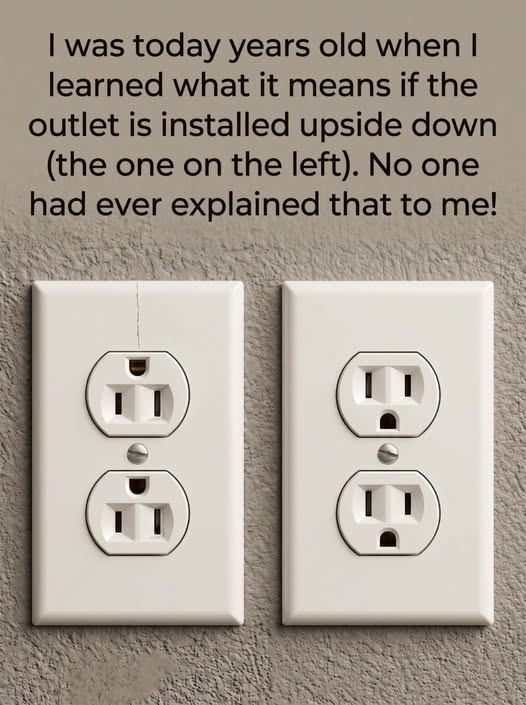
Sometimes you can spot obvious warning signs.
Pay attention if you notice:
- Burn marks
- Discoloration
- Cracks
- Loose receptacles
- Sparks
- Buzzing or sizzling sounds
- A burning smell
- Plugs that fall out easily
- Unusual heat around the receptacle
- Repeatedly tripped breakers
An outlet being upside down isn’t on that list.
That’s because orientation alone isn’t an indication of an electrical fault.
If the outlet is damaged or behaving strangely, however, that’s a different story.
What Is a GFCI Outlet?
You may also notice that some outlets look different because they have TEST and RESET buttons.
These are commonly associated with ground-fault circuit-interrupter protection.
GFCI protection is designed to reduce the risk of severe electric shock by interrupting power when it detects a ground-fault condition.
You’ll commonly encounter GFCI protection in areas where electricity may come into contact with water, such as bathrooms, kitchens, garages, laundry areas, and outdoor locations, although the exact requirements depend on the applicable electrical code and installation.
If a GFCI receptacle trips repeatedly, don’t simply keep pressing the reset button without finding out why.
Persistent tripping can indicate a problem that needs attention.
What About AFCI Protection?
Another type of protection you may encounter is AFCI, or arc-fault circuit-interrupter protection.
AFCI devices are designed to detect certain dangerous electrical arcing conditions and interrupt the circuit.
Depending on the building’s age, location, circuit, and applicable electrical requirements, AFCI protection may be provided at a breaker or through a receptacle/device.
Again, the direction a receptacle faces doesn’t tell you whether AFCI protection is present.
Look for the actual protective device or consult an electrician if you’re unsure.
Should All the Outlets in a House Face the Same Direction?
Not necessarily.
There’s nothing inherently wrong with seeing a mixture of orientations simply because they’re different.
However, consistency can be useful.
When every receptacle faces the same direction, it can make the installation look cleaner and may make unusual receptacles easier to notice.
If one outlet suddenly looks different after electrical work, you might reasonably wonder why.
But don’t assume something is wrong simply because it doesn’t match its neighbors.