
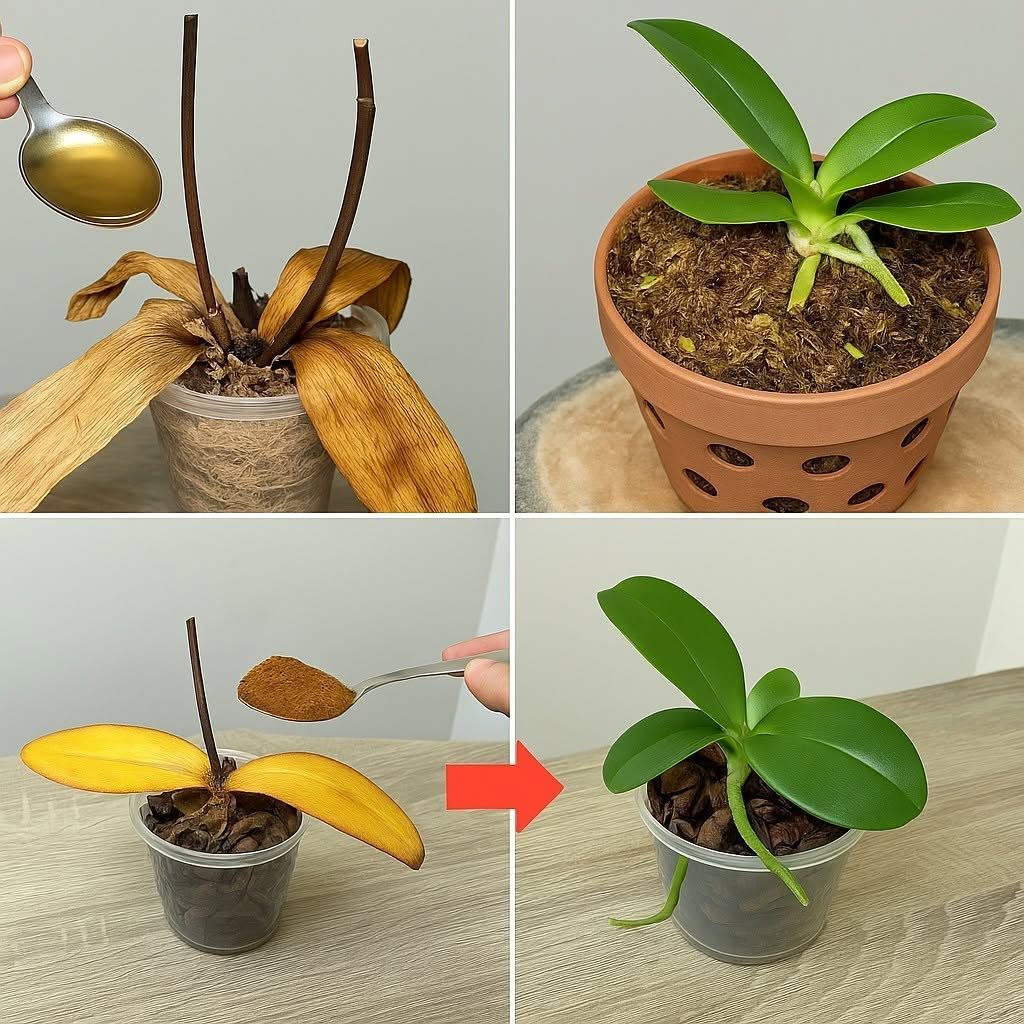
A severely damaged orchid may need to focus on rebuilding its root system before it produces flowers.
That means recovery can take weeks or months, depending on the extent of the damage and the plant’s growing conditions.
Be patient.
New roots and leaves are much better signs of recovery than trying to force flowering too soon.
How to Encourage Future Blooms
Once the orchid has recovered, focus on consistent care rather than miracle treatments.
Provide appropriate light
Bright, indirect light is usually one of the most important factors for healthy growth and flowering.
Water appropriately
Water thoroughly when the orchid needs it, then allow excess water to drain away.
Avoid following a rigid watering schedule if environmental conditions vary.
Use an orchid fertilizer correctly
When the plant is actively growing and has a functioning root system, a balanced orchid fertilizer can provide useful nutrients.
Follow the manufacturer’s instructions rather than increasing the dose in an attempt to force flowers.
Keep the roots healthy
Use an appropriate orchid pot and growing medium, and make sure the container provides adequate drainage and airflow.
Avoid constant disturbance
Repeatedly repotting, moving, cutting, or treating an already stressed orchid can slow recovery.
Can an Orchid Really Bloom All Year?
Some orchids can produce flowers repeatedly or have long-lasting blooms, but no ingredient can guarantee year-round flowering.
Flowering depends on the orchid species or hybrid, maturity, light, temperature, nutrition, root health, and growing conditions.
For many common moth orchids, appropriate changes in temperature and light can help encourage a new flower spike, but forcing continuous flowering is neither necessary nor always realistic.
What Not to Put on Orchid Roots
Be cautious with viral gardening recipes that recommend sprinkling large amounts of:
- Baking soda
- Sugar
- Salt
- Coffee grounds
- Undiluted fertilizer
- Unknown powders
- Household cleaning products
These substances are not reliable treatments for dead roots and can damage the plant or interfere with the growing medium.
A healthy orchid usually benefits far more from correct light, watering, drainage, airflow, and appropriate nutrition than from kitchen remedies.
The Bottom Line
There is no magic spoonful that can bring dead orchid roots back to life or guarantee flowers all year.
If your orchid has lost roots, don’t give up immediately. Identify the dead roots, remove the damaged tissue, improve drainage and airflow, provide suitable light, and give the plant time to produce new roots.
Once the root system becomes healthy again, proper feeding and consistent care can help the orchid return to normal growth and flowering.
The real secret isn’t a miracle powder—it’s creating conditions in which the orchid can rebuild itself.
Plant-Care Disclaimer
Orchid care varies by species, hybrid, growing medium, and environmental conditions. Always follow fertilizer instructions carefully, and avoid applying concentrated household substances to plant roots without reliable horticultural guidance.